
From Gorm the Old to Queen Margrethe II - Denmark's monarchy is the oldest in the world
Since around year 900 Denmark has existed as a monarchy that started with Gorm the Old extending all the way now to the current Queen, Margrethe II. This means that Denmark has the oldest ruling monarchy in the world. Read more about the Royal Family and visit her home Amalienborg, in Copenhagen.

Amalienborg Palace in Copenhagen, is the main residence of the Royal Family.
Since around year 900 Denmark has existed as a monarchy that started with Gorm the Old extending all the way now to the current Queen, Margrethe II. This means that Denmark has the oldest ruling monarchy in the world. Denmark has a constitutional monarchy, which means that the Queen or monarch cannot perform political acts, though she is the formal Head of Government, and once a government has been formed, the Queen’s role is to appoint it.
Once the Royal Family was of great importance to the functioning of society, but now their position is largely ceremonial. The Queen’s main role is to serve as representative for Denmark abroad, and serve as a unifying figure at home. In Denmark the Queen and the Royal Family are widely supported and liked. They are present around the country for special events, openings, anniversaries, exhibitions and ceremonies of various kinds.

The Changing of the Guard, Amalienborg Palace, Copenhagen
In addition to having the oldest monarchy in the world, Denmark also prides itself on having The Royal Guard. The Royal Guard was founded over 350 years ago, and they still parade everyday with bearskin hats and blue uniforms through central Copenhagen before they go on duty at Amalienborg Palace, where they stand guard over the Queen and Royal Family while they are in residence.
If you are in Copenhagen don't miss the chance to watch the changing of the guards at Amalienborg Palace everyday at 12 pm. It's a real Danish cultural experience that is quite a sight to see.
Find Amalienborg on the map below…
What you didn't know about The Little Mermaid
The Little Mermaid is one of the most beloved and recognisable symbols of Denmark. She has been adapted to various media including ballet, opera and film and interpreted in thousands of different ways on t-shirts, statuettes, paintings, postcards and posters. But why is it people come from all over the world to visit the understated statue along Langelinie in Copenhagen?

The Little Mermaid is one of the most beloved and recognisable symbols of Denmark. She has been adapted to various media including ballet, opera and film and interpreted in thousands of different ways on t-shirts, statuettes, paintings, postcards and posters. But why is it people come from all over the world to visit the understated statue along Langelinie in Copenhagen?
The Little Mermaid was originally a fairly tale written by the Danish author Hans Christian Andersen in 1836. The story traces the journey of a young mermaid as she falls in love with a handsome prince and tries to gain a human soul. She yearns for the world out of the water yet she is held down by the forces that keep her under the sea. It is a story of love, longing and immortality that contains the classic theme of loved turned to tragedy and redemption, that people are still fascinated by.
Carl Jacobsen, son of the founder of Carlsberg brewery, commissioned the sculpture of The Little Mermaid by Danish sculptor Edward Eriksen in 1909, after he had seen a ballet interpretation of Hans Christian Andersen’s story. Since her unveiling along Copenhagen’s Harbour in 1913, the Little Mermaid has become a national symbol of Denmark and therefore also attracted protest and vandalism, but this only seems to fuel the public’s interest in her. She is still the most famous tourist attraction in Denmark. Proving that her interesting backstory and humble beauty, continues to inspire and fascinate after all these years.
Little Mermaid facts
The statue's head was modelled after the Danish ballerina Ellen Price, but as she would not agree to model in the nude, the sculptor's wife was used for the body.
She draws about 1.5 million visitors a year to Copenhagen.
She has been beheaded 3 times, lost her arm once and had paint poured over her several times by activists.
The Little Mermaid is only 4.1 feet (1.25 metres) high.
Find the Little Mermaid along Copenhagen’s Harbour below…




10 reasons why the Danes are so happy
Since 2012, Denmark has been consistently ranked at the top of the World Happiness Report’s list of happiest countries in the world. Could it have something to do with it’s welfare state, high standard of living, or maybe the Hygge effect? We give you 10 reasons why Denmark ranks as one of the happiest countries on the planet.

The land of happiness and community…
Since 2012, Denmark has been consistently ranked at the top of the World Happiness Report’s list of happiest countries in the world. Could it have something to do with it’s welfare state, high standard of living, or maybe the Hygge effect? We give you 10 reasons why Denmark ranks at the top of the list of happiest countries on the planet.
It’s no wonder that people are generally a little bit happier in Denmark. The Danes have access to great education and health care. The government is stable and there are low levels of public corruption. Furthermore, the vast majority of Danes happily pay some of the highest taxes in the world, because they can see that it creates a better society.
The World Happiness Report features 156 countries ranked according to how happy their citizens perceive themselves to be, as well as this year focusing on happiness and community. So what is really going on that makes the Danes so content? Here are a few ideas…
Camaraderie - many Danes feel a close almost tribal kinship to Denmark and other Danes and even remain close to their friends from grade school.
Trust - Denmark has an extremely high standard of trust. Three out of four Danes believe that they can trust a majority of people. This leads to overall lower stress levels and faith that people are generally open, helpful and do what they say they will.
Hygge - creating a cozy and hospitable atmosphere is essential to Danish culture.
Family/Work-life balance - Danes have a generous amount of free time to spend with family. You’re often trusted by your boss to make your own schedule. So you have a lot of flexibility along with 6 weeks of mandatory vacation a year. Danish families receive a total of 52 weeks maternity leave. But beyond that family is very important to the average Dane in creating a sense of identity and belonging.
Welfare - the Danish welfare state works. People pay on average 45% in taxes but in return receive free Healthcare, childcare, education, unemployment and many other benefits.
Equality - Denmark is ranked as one of the top countries for gender equality.
Community - many Danes volunteer or have a hobby and feel a great benefit from being a part of a community with the same interests and passion.
Safety - Denmark is a very safe country with low-levels of corruption and crime.
Mobility - Denmark has many options for education and changing careers and many people are empowered to try new things such as shift careers.
Exercise - It’s proven that exercise and motion boosts your sense of well-being and happiness. Not only do the Danes love to cycle but they are crazy in general about sports and exercise.
Hope you enjoyed. Thanks for stopping by,
Welcome Giftshop & Souvenirs


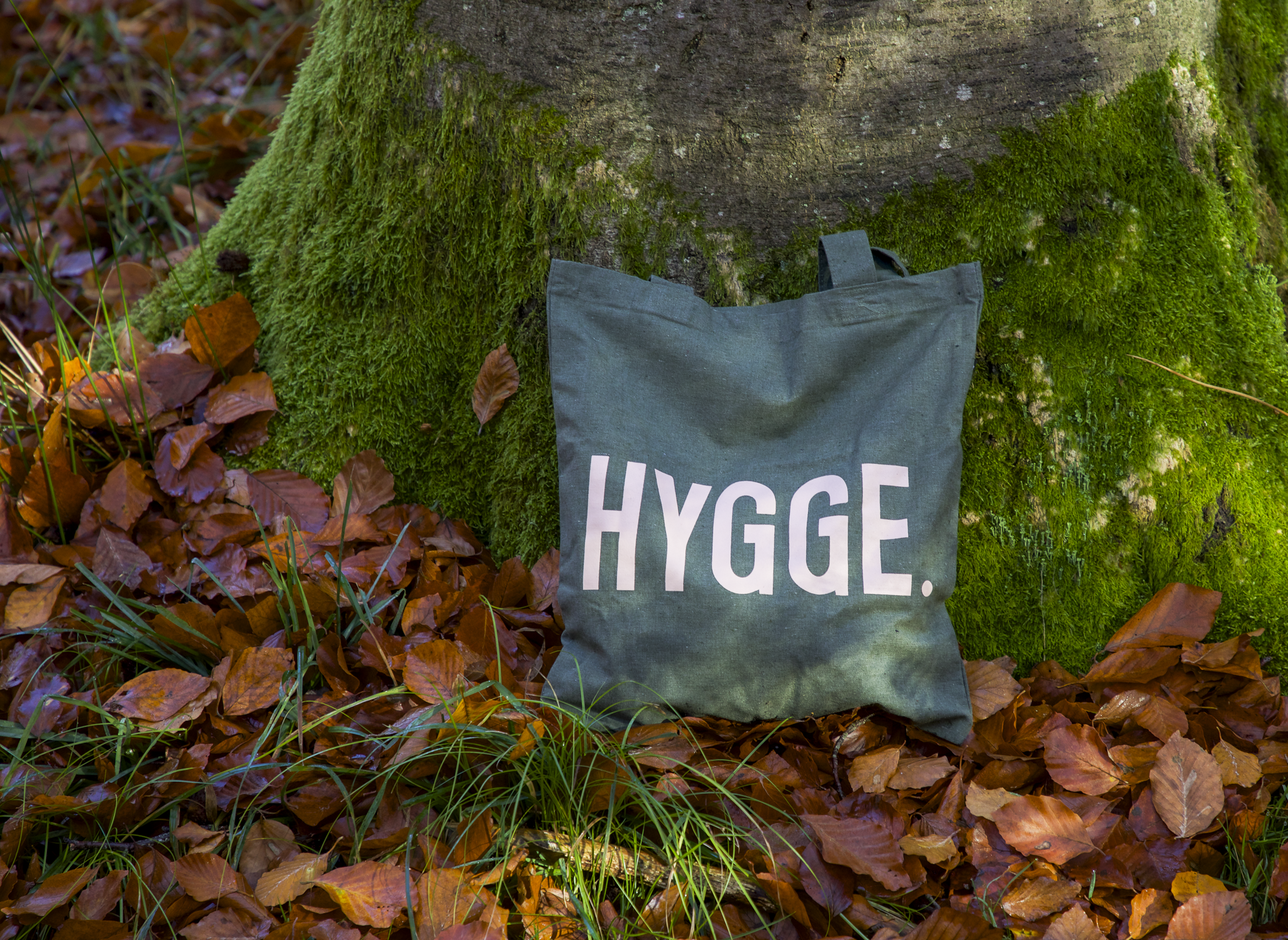
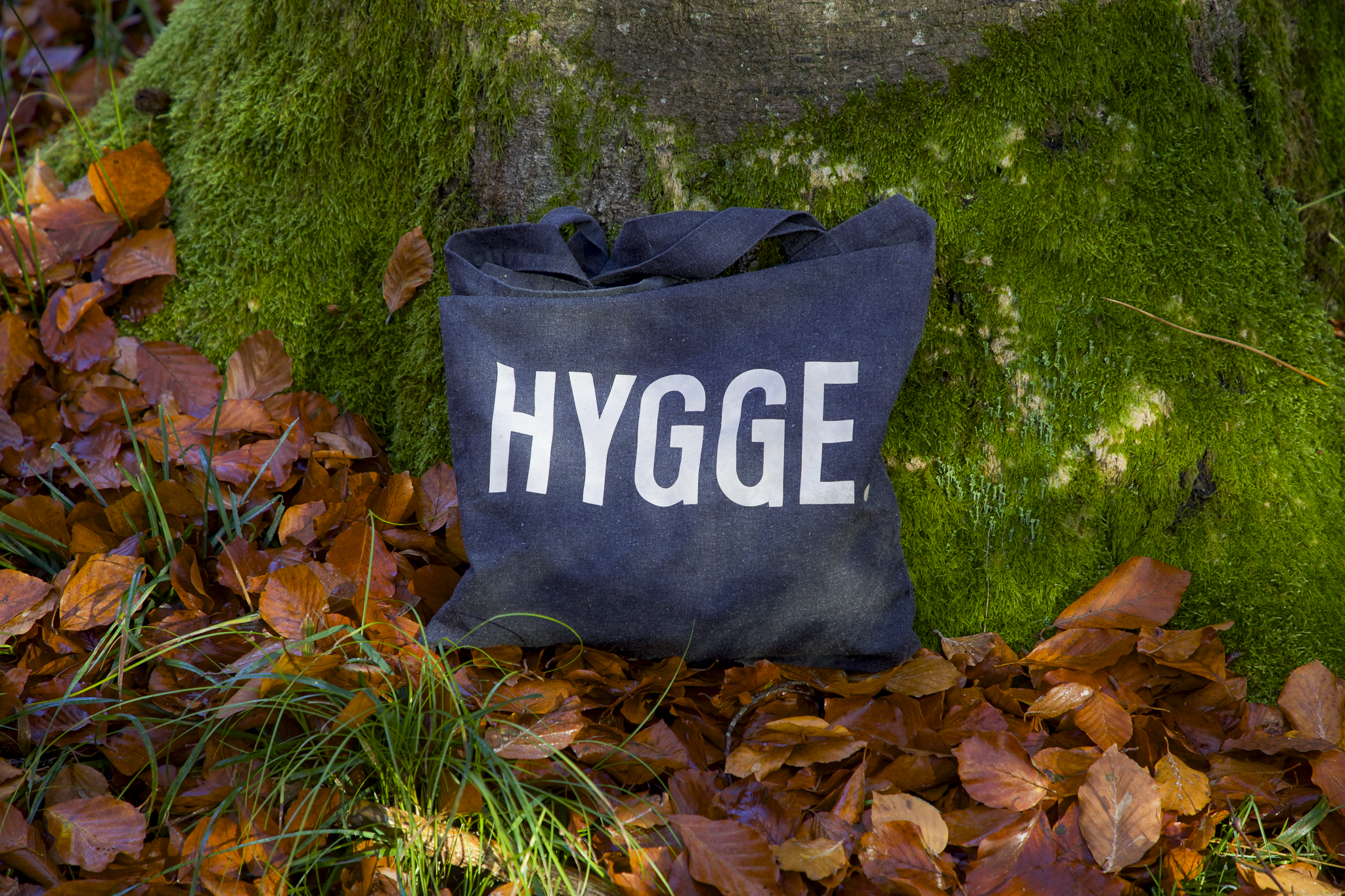
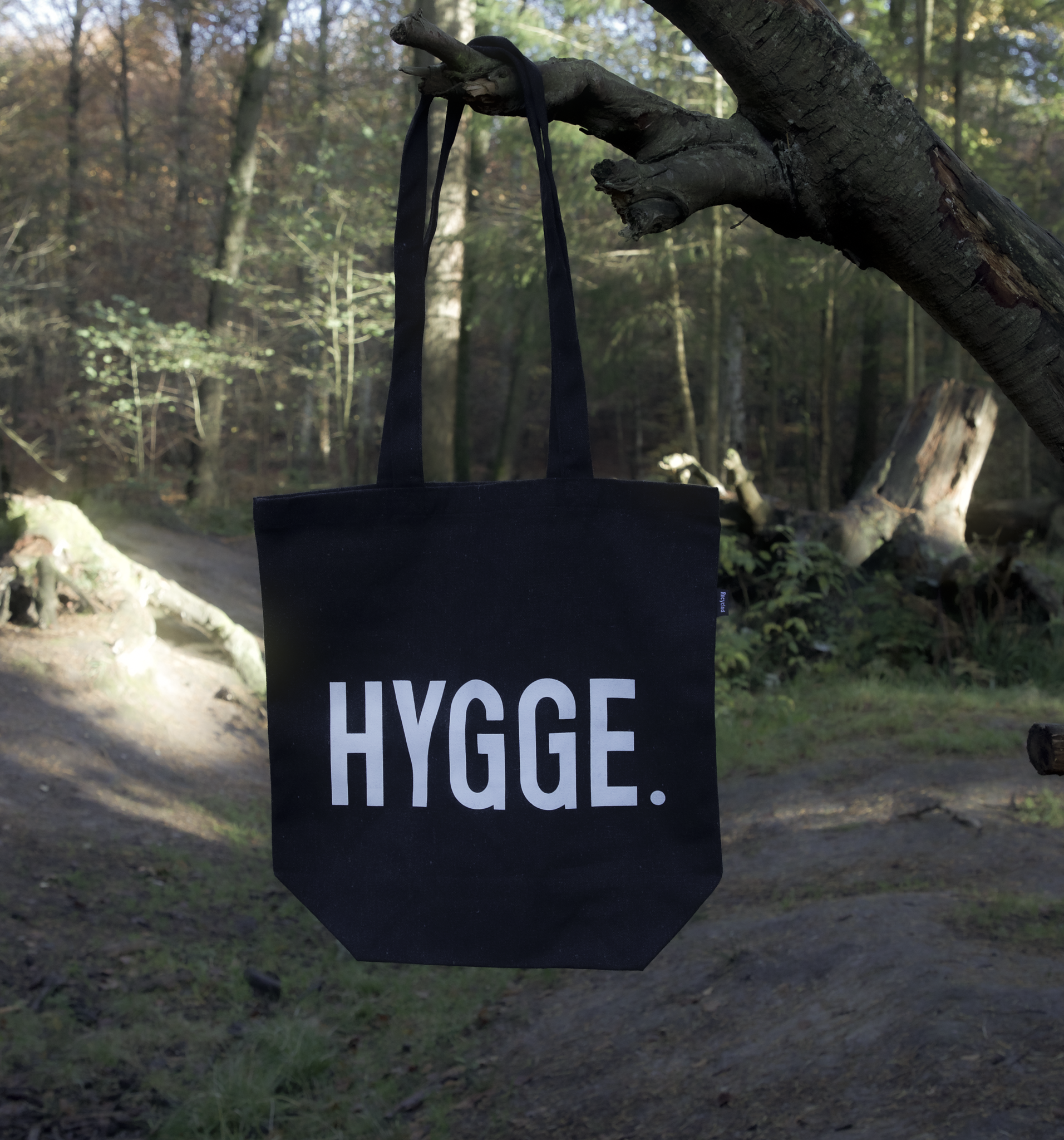
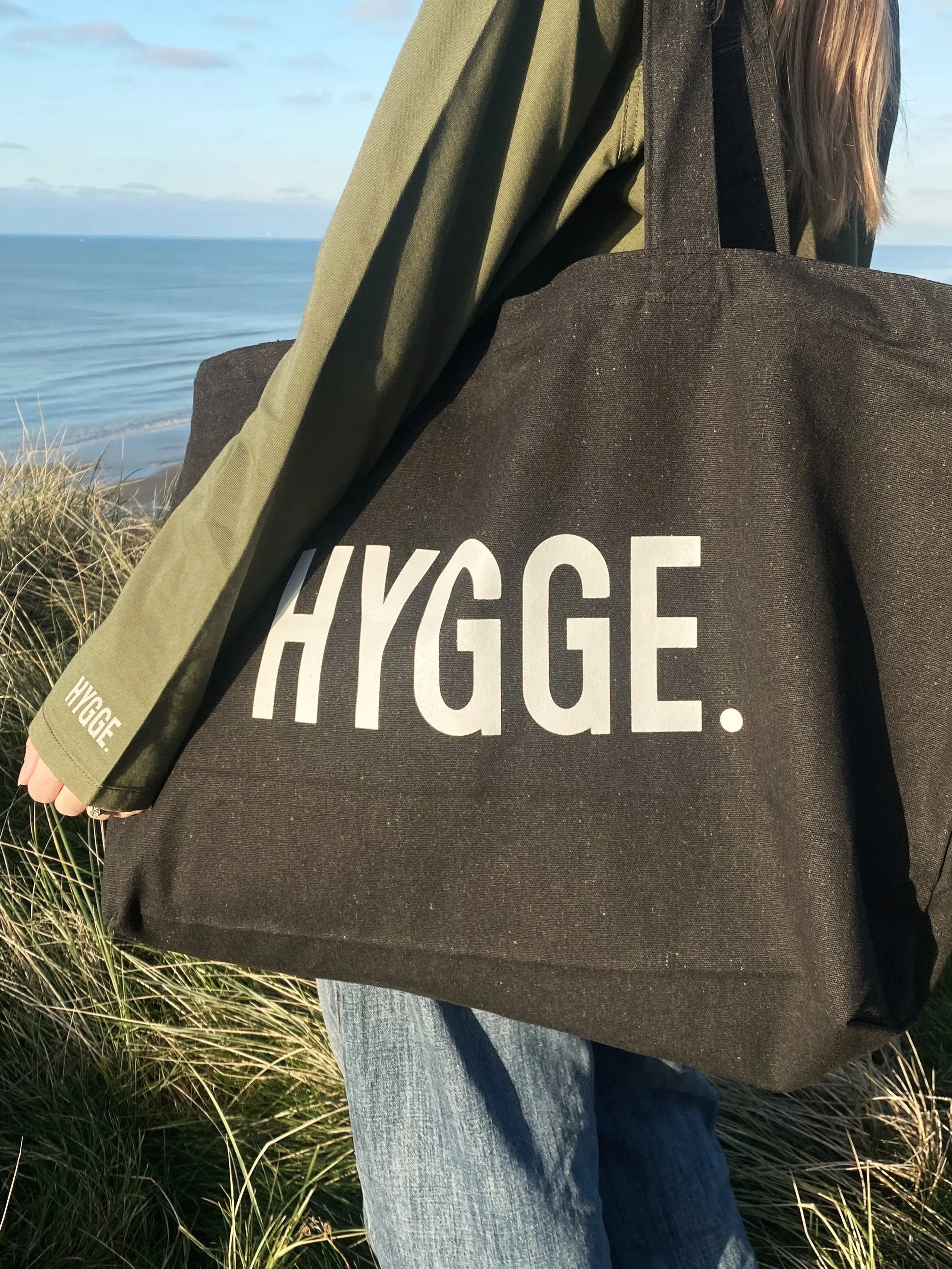


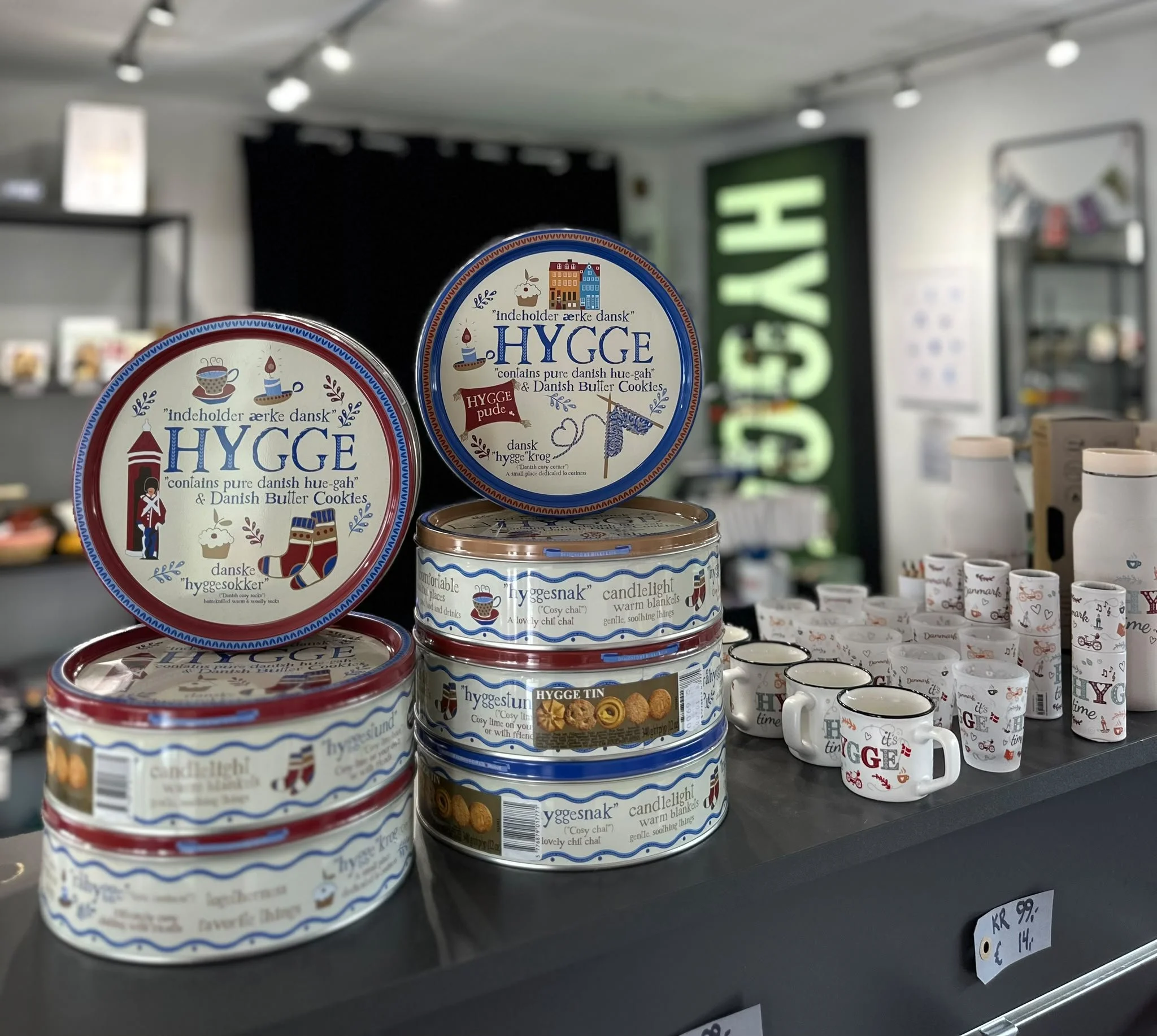
Product Description: Sweet, hyggeligt and delicious, our custom-made gift baskets are the perfect present for employees, partners, colleagues and loved ones. Filled with a selection of some of our finest products from Denmark, hand-picked by us and available in three sizes. It includes a variety of Danish specialties such as chocolates, wine gums, cookies, beer, tea and other small gift articles.
We also curate a vegan and gluten-free basket, that offers a perfect combination of healthy snacks and Danish treats. This is great for Christmas or birthdays.
Typical Contents: (please note that items may vary)
599 kr. - Regular Basket
Chocolate
Chocolate covered almonds
Danish cookies
Danish HYGGE Coffee
HYGGE candle
Danish tea
Hygge napkins
Hygge beanie
Danish hard candies
799 kr. - Deluxe Basket
A Danish classic “Hoptimist” designed and made in Denmark since 1964.
Danish designed coffee mug
Chocolate
Chocolate covered almonds
Danish cookies
Danish HYGGE Coffee
HYGGE candle
Danish tea
Hygge napkins
Hygge beanie
Danish hard candies
999 kr. - Vegan and Gluten-free Basket
A Danish classic “Hoptimist” designed and made in Denmark since 1964
Gourmet vegan wine gums
Danish roasted coffee
Danish specialty tea
Danish gluten-free micro brew
Gluten-free chips
Gluten-free deluxe crackers
Vegan Danish licorice
Write or give us a call before you order and we wil help you put together the perfect gift combination for holidays, birthdays, baby showers, confirmations or any other special occasion.
Available for delivery. You can choose delivery location at checkout. We accept all major credit cards.
Email us if you have any questions: contact@welcomegiftshop.dk